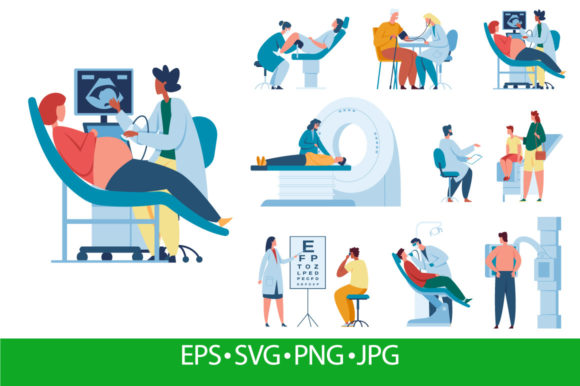
Doctors Consulting Patients: Graphics & Illustrations
As a brand designer who has spent years helping local businesses find their visual voice, I approach every new graphic design asset with a critical eye. It is not just about whether an image looks good in isolation; it is about how it functions within a real-world brand identity. Recently, I reviewed the Doctors Consulting Patients collection to see if it could serve a specific client need. While this set features medical themes—doctors and patients, professional staff at work, and various examination scenarios like checking eye vision or dentist examinations—it sparked a broader conversation about how specialized illustrations can elevate small business branding.
First Impressions: Trust, Clarity, and Professionalism
The immediate mood created by the Doctors Consulting Patients vector set is one of reliability and care. In professional branding, these are currency. The clean lines and clear depiction of medical interactions suggest a personality that is modern, trustworthy, and service-oriented. For a local business in the healthcare, wellness, or senior care sector, this aesthetic is invaluable. It does not feel overly clinical or cold; instead, it leans into a friendly, human-centric approach. This balance is difficult to achieve, making these graphics a strong candidate for brands that need to communicate expertise without intimidation.
When evaluating this asset for a hypothetical project, such as a new community health clinic or a boutique physiotherapy practice, the style fits seamlessly. It avoids the clutter often found in stock photography, offering a streamlined look that supports visual hierarchy. This clarity is essential when you are trying to guide a customer’s eye through complex information on a brochure or website.
Real-World Applications for Local Brands
Beyond the obvious medical context, let us explore how these design assets can be deployed across various touchpoints. For a handmade business selling organic skincare or wellness products, the imagery of careful examination can metaphorically represent quality control and personalized care. Here is how I would integrate them:
- Packaging Design: Use simplified icons from the set on product labels to indicate specific benefits, such as eye care or dental hygiene, creating instant recognition on the shelf.
- Social Media Graphics: Create educational carousels explaining health tips, using the doctor-patient illustrations to break up text and make the content more engaging.
- Printable Design: Incorporate these visuals into thank-you cards or informational inserts included in shipment boxes to reinforce the brand’s commitment to customer well-being.
- Website Banners: Use the high-resolution PNG design files to create welcoming hero sections that immediately establish the professional nature of the service.
For marketers and social media managers, having a cohesive set of clipart and illustration elements ensures consistency across campaigns. Whether you are designing a flyer for a health fair or a poster for a new service launch, these vectors provide a unified visual language.
Enhancing Business Presentation and Trust
The primary value of using high-quality SVG design or vector assets like Doctors Consulting Patients lies in the polish they bring to your commercial design efforts. A stronger first impression is often the difference between a browser and a buyer. When customers see consistent, professional marketing visuals, their trust in the brand increases. This is particularly true for product sellers and service providers where intangible benefits must be made visible.
These graphics support better product recognition by providing unique visual markers that competitors may lack. By integrating these illustrations into your logo design elements or as decorative accents on hang tags, you create a more memorable brand experience. The result is improved shelf appeal and a stronger emotional connection with your audience, who perceive the brand as established and credible.
Strategic Placement and Cautionary Notes
While versatile, this asset set works best in specific contexts. It shines as a hero graphic on landing pages, as a decorative element on seasonal packaging for health-focused gifts, or in editorial design for newsletters. However, there are areas where caution is required. Avoid using these detailed illustrations on very small labels where intricate lines might blur. They are not suitable for luxury minimalist brands that rely on negative space and typography alone, as the figurative nature of the art may compete with the desired aesthetic.
Additionally, be mindful of crowded product packaging. If your label already contains extensive legal information or ingredient lists, adding complex illustrations can reduce readability. In such cases, use simplified icons from the set rather than full scenes. Ensure there is sufficient contrast against the background, especially if printing on textured or dark materials common in boutique visuals.
Practical Designer Notes for Implementation
Before finalizing any commercial license purchase or integrating Doctors Consulting Patients into a client project, I recommend a rigorous testing phase. First, test the asset on real product mockup templates to see how it scales. Check its usability in black and white to ensure it remains legible for monochrome printing needs, such as receipts or simple stamps.
Preview the vector set on small labels to confirm that details like the dentist examining teeth or the x-ray imagery do not become muddy. Test the colors against your brand palette; sometimes, the default colors in a digital product need adjustment to match your Canva template or custom design system. Compare the style with competitor packaging to ensure you are not inadvertently mimicking another local brand.
Typography pairing is also crucial. These medical-themed graphics pair well with clean sans serif fonts for a modern look, or gentle script fonts if you want to soften the clinical edge for a wellness brand. Always inspect the SVG design files for editability, allowing you to tweak line weights or remove unnecessary elements. Finally, confirm the commercial license terms explicitly cover physical product sales and client work to avoid legal issues down the line. By treating these design assets with strategic intent, you transform simple images into powerful tools for professional branding.