Reviewing the First Aid CPR Training Flyer for Embroidery
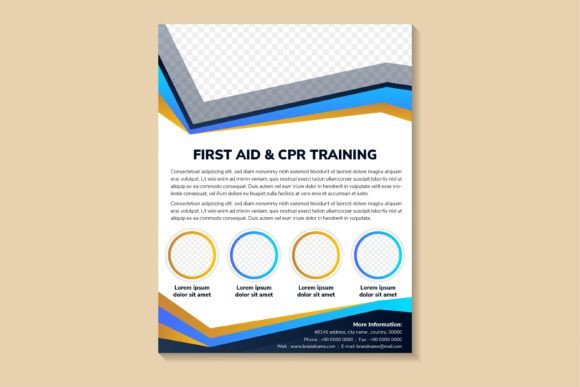
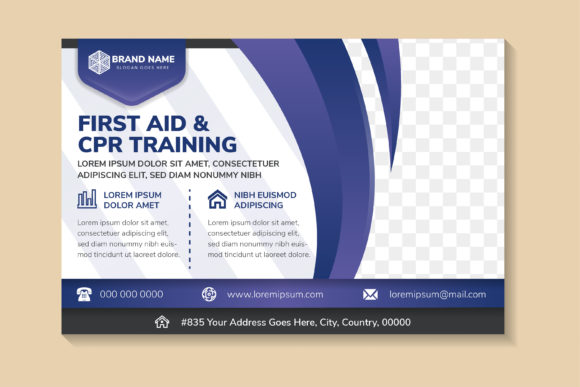
As a designer who spends half my life digitizing files and the other half staring at stitch previews, I have learned that not every graphic translates well to thread. We often see Print Templates and digital Graphics marketed with broad appeal, but the jump from a flat screen to textured fabric is significant. Recently, I evaluated the First Aid Cpr Training Horizontal Flyer not as a printed handout, but as a potential asset for machine embroidery projects. While the source material describes an abstract geometric flyer template with a purple gradient and black elements on a white background, my focus was on how these visual cues translate into a tangible embroidery project.
Visual Translation and Design Mood
The first impression of this design is one of structured urgency. The horizontal layout suggests stability, while the abstract geometric elements imply modernity and precision—traits essential for medical training branding. In the context of embroidery, the "purple gradient" mentioned in the description presents an immediate technical challenge. Gradients do not exist in thread; they must be simulated through color blending or distinct block changes. For a professional machine embroidery design, this means we are likely looking at a multi-color piece requiring careful thread selection to maintain that sleek, modern aesthetic without it looking muddy or disjointed.
The mood is serious yet approachable. It does not scream "emergency" in a chaotic way but rather communicates preparedness. This makes it suitable for custom apparel worn by instructors, volunteers, or safety officers. When I visualize this stitched out, I see clean lines and defined shapes. The black elements provide necessary contrast, which is crucial for readability from a distance. However, the "space for photo collage" noted in the original description is irrelevant for stitching. Instead, we must interpret that negative space as an opportunity for personalized text, such as a company name, certification date, or instructor’s name.
Real-World Application Scenarios
Let us consider a practical scenario. Imagine you run a small business providing CPR certification courses. You want to create a premium personalized gift for your top instructors or a uniform look for your team. A standard printed badge feels flimsy. An embroidered patch or direct-to-garment stitch offers durability and prestige.
I envision using this design on a high-quality polo shirt or a sturdy canvas tote bag design. On a tote bag, the horizontal nature of the flyer fits perfectly across the front panel. The geometric shapes can be rendered using fill stitch for solid areas and satin stitch for borders, creating a tactile difference that adds value. For a sweatshirt embroidery project, the design could sit prominently on the chest or back. The abstract nature allows it to function almost like a logo, reinforcing brand consistency for your craft business or training center.
Another viable application is the embroidered patch. Patches are versatile assets for Etsy sellers and boutique owners. By digitizing the key geometric components of the First Aid Cpr Training Horizontal Flyer, you can create a velcro-backed patch that instructors can swap between jackets. This increases the perceived value of the finished product and allows for easy inventory management.
Technical Considerations for Stitching
While the visual appeal is strong, we must address the technical realities. The original graphic relies on a purple gradient. In embroidery, we achieve this effect by selecting three to four shades of purple thread and arranging them in a way that mimics the transition. This requires a keen eye for thread colors. If the contrast between the shades is too low, the design will lose its definition, especially on textured fabrics.
Stitch density is another critical factor. Geometric designs often tempt digitizers to use dense fills to achieve a solid look. However, excessive density can cause puckering, particularly on lighter materials. If you are applying this to a baby embroidery item, such as a onesie for a junior safety camp, you must reduce the density and use a high-quality cut-away stabilizer to support the fabric. For heavier items like aprons or tote bags, a tear-away stabilizer might suffice, but testing is non-negotiable.
We must also consider the hoop size. The horizontal layout implies width. Ensure your machine’s hoop can accommodate the full breadth of the design without cropping essential geometric details. If the design includes tiny lettering or intricate corners from the original flyer, these may need to be simplified. Tiny details often get lost in the stitch structure or break during washing. As an experienced reviewer, I advise simplifying complex vector points into smoother curves that the needle can follow efficiently.
Fabric and Surface Challenges
Not all surfaces are created equal. Applying this design to a curved surface, like a cap, requires careful positioning. The horizontal length might wrap around the curve, distorting the geometric symmetry. In such cases, reducing the width or breaking the design into smaller, modular elements might be necessary. Similarly, stretchy fabrics require additional stabilization to prevent the geometric lines from wavering after the hoop is removed.
Dark fabrics present a contrast issue. The original design features black elements on a white background. If stitching on a navy or black garment, the black elements will disappear. You would need to substitute the black thread with a lighter color, such as white or silver, to maintain visibility. This alters the design’s mood slightly but ensures functionality. Always test your digital embroidery file on scrap fabric of the same type and color before committing to the final handmade product.
Commercial Viability and Brand Trust
For small shop product creators, the professionalism of the design directly impacts buyer trust. A crisp, well-digitized embroidery conveys authority. Sloppy stitching or poor color choices can undermine the serious nature of CPR training. By investing time in proper digitization of this flyer concept, you elevate your design assets from simple decorations to functional branding tools.
When selling these items, whether as holiday embroidery gifts for healthcare workers or year-round commercial embroidery for clinics, clarity is key. Use the geometric shapes to frame text rather than overpower it. The abstract nature allows for flexibility; you can adapt the color scheme to match specific organizational branding while keeping the core structure intact.
Final Designer Notes
Before launching this into production, verify the licensing terms. Since the source is a Print Template, ensure you have the right to adapt it into a physical, stitched product for sale. Check if the original creator allows derivative works. Once cleared, start with a test stitch. Review the underlay stitches to ensure they provide enough foundation for the top stitching. Check the jump stitches and trim them cleanly to maintain a professional finish.
In summary, the First Aid Cpr Training Horizontal Flyer offers a strong foundational aesthetic for embroidery if approached with technical diligence. It bridges the gap between informational graphics and tactile branding. By respecting the limitations of thread and fabric, you can transform this digital concept into a durable, high-value custom apparel or accessory item that resonates with professionals in the safety and health sector.