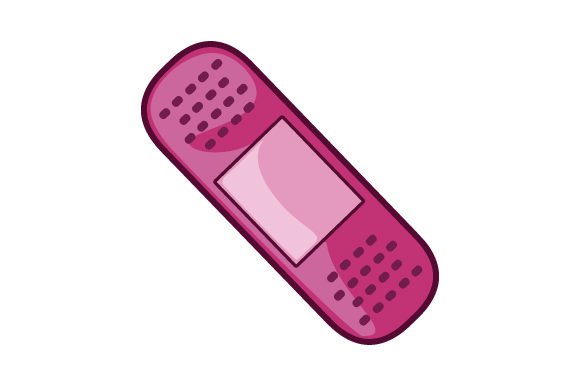
Band Aid: A Designer’s Review for Real Embroidery Projects
As an embroidery designer who has spent years digitizing files and stitching out countless samples, I have learned that the simplest concepts often present the most interesting challenges. When I first opened the Band Aid design file, my initial reaction was one of cautious optimism. It sits squarely in the Medical category but feels right at home in the broader world of Crafts, offering a playful yet functional aesthetic. This is not just a generic clipart conversion; it is a thoughtful digital asset that requires a keen eye to execute properly on fabric.
In this review, I am evaluating Band Aid from the perspective of someone who needs to deliver high-quality finished products to clients. Whether you are an Etsy seller looking to expand your niche or a hobbyist creating personalized gifts, understanding how this design behaves under the needle is crucial. I received the design in SVG, Transparent PNG, EPS, and DXF formats, which provides flexibility, but the real test lies in how these vectors translate into thread.
First Impressions and Visual Personality
The mood of the Band Aid design is inherently comforting with a touch of whimsy. It evokes feelings of care, recovery, and gentle humor. Visually, the layout is compact, making it ideal for items where space is at a premium. The detail level is moderate, avoiding excessive complexity that could lead to thread breaks, yet it retains enough definition to be recognizable from a distance.
For a craft business owner, visual personality is everything. This design does not scream for attention; instead, it invites a closer look. It works beautifully as a subtle accent on a larger piece or as a standalone statement on smaller goods. The shape is organic, suggesting that it will drape well on curved surfaces, provided the digitizing accounts for fabric pull. When I visualize this on a tote bag design, it adds a layer of narrative—suggesting that the bag is ready to carry first-aid kits, books, or comfort items.
Real-World Application: The Custom Sweatshirt Scenario
To truly test the viability of Band Aid, I imagined a specific client project: a custom embroidered sweatshirt for a nursing student or a medical professional who appreciates subtle humor. In this scenario, placement is key. I would position the design on the left chest area, roughly two inches below the shoulder seam. This location is classic for sweatshirt embroidery and ensures the design remains visible without being overwhelming.
When stitching on fleece or heavy cotton blends, the fabric texture plays a significant role. The Band Aid design, depending on its internal stitch structure, may require a cut-away stabilizer to prevent distortion. If the design utilizes a fill stitch for the main body of the bandage, the density must be balanced. Too dense, and the fabric puckers; too light, and the backing shows through. For a handmade product intended for daily wear, durability is non-negotiable. I would recommend testing a sample on scrap fabric identical to the final garment to check for any pulling around the edges.
Beyond apparel, this design shines on accessories. Imagine it stitched onto a canvas apron for a first-aid trainer or a kitchen towel for a parent who deals with minor bumps and bruises. As a personalized gift, it pairs well with text, such as a name or a phrase like "Kiss it Better." However, one must be careful with scale. If adding text, ensure the font weight complements the thickness of the Band Aid lines to maintain visual harmony.
Navigating Technical Challenges
While Band Aid is versatile, there are specific situations where caution is required. Small hoop sizes can be tricky if the design includes fine details that approach the limits of the machine’s precision. If the design features tiny corners or intricate inner shapes, these areas are prone to thread bunching if the tension is not perfectly calibrated. I always advise checking the stitch path simulation before hitting start.
Textured fabrics, such as terry cloth towels or ribbed knits, present another challenge. The stitch density of the Band Aid design must be sufficient to bridge the gaps in the fabric weave. On dark fabric, thread color contrast becomes critical. A white or pastel thread on navy blue will pop, but if the design relies on subtle shading, it might get lost. I recommend creating black and white mockups to verify that the silhouette remains clear regardless of color choices.
Curved surfaces, like caps or hats, require special attention. If you plan to use Band Aid as an embroidered patch or directly on a cap, consider using a backing material that adds stiffness. This helps maintain the shape of the design during wear and washing. For stretchy fabrics, a stabilizer is not just recommended; it is essential. Without proper support, the design may warp after the first wash, ruining the professional look of your small shop product.
Enhancing Brand Value and Customer Trust
From a business standpoint, the quality of your embroidery directly impacts customer trust. A clean, well-stitched Band Aid design signals professionalism. It shows that you care about the details, which encourages repeat business. For commercial embroidery projects, consistency is key. Ensure that every item produced meets the same standard by documenting your settings—thread types, tension, and stabilizer choices.
This design also offers excellent potential for printable mockup creation. Since you receive a Transparent PNG, you can easily overlay the design on product photos for your online store. This allows customers to visualize the finished product before purchasing, increasing conversion rates. However, remember that a digital preview is not a substitute for a physical sample. Always stitch out a prototype to confirm that the colors and scale match your brand’s aesthetic.
Practical Notes for the Embroidery Designer
Before committing to a large production run or listing Band Aid as a new item in your store, take these practical steps:
- Test on Scrap Fabric: Always run a test stitch-out on the exact fabric you plan to use. This reveals issues with tension and density before they ruin a final product.
- Check Thread Contrast: Verify that your chosen thread colors provide enough contrast against the fabric background. High contrast improves readability and visual appeal.
- Review Stitch Density: Examine the design for areas that may be too dense for lightweight fabrics. Adjust settings if necessary to prevent puckering.
- Confirm Hoop Size: Ensure the design fits comfortably within your hoop, leaving adequate margin for stabilization.
- Inspect Small Details: Zoom in on the digital file to check for any tiny elements that might not stitch out cleanly. Simplify if needed.
- Licensing Verification: Although you receive multiple file formats, always confirm the licensing terms. Ensure you have the right to use the design for commercial purposes if you plan to sell finished items.
In conclusion, Band Aid is a solid addition to any designer’s library. It bridges the gap between Medical utility and Crafts creativity, offering a versatile option for a wide range of projects. By paying attention to fabric choice, stabilization, and stitch quality, you can transform this digital file into a standout embroidery project that delights customers and enhances your brand’s reputation. Whether for a holiday embroidery gift or a year-round custom apparel line, this design holds up well under scrutiny when handled with professional care.