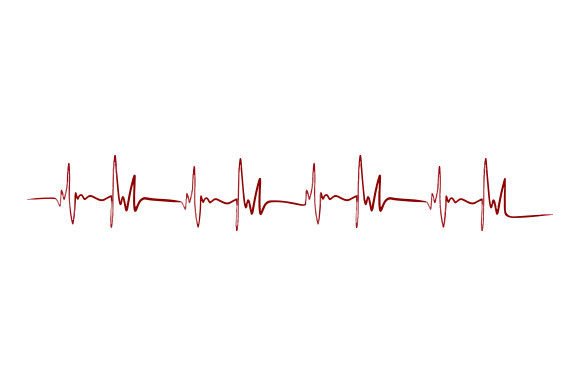
Heartbeat Symbol: A Designer’s Review for Embroidery Projects
As an embroidery designer who has spent countless hours digitizing, testing, and critiquing machine embroidery designs, I approach every new file with a mix of curiosity and skepticism. We have all been there: you download a design that looks crisp on the screen, only to find it puckers the fabric or loses its definition once the needle hits the cloth. Today, I am taking a close look at the Heartbeat Symbol, a digital asset categorized under Medical and Crafts, to determine if it holds up in real-world applications. This is not just about aesthetics; it is about functionality, stitch quality, and how this design translates from a digital embroidery file into a tangible, high-quality finished product.
First Impressions and Visual Personality
The first thing that strikes me about the Heartbeat Symbol is its clean, iconic simplicity. In the world of medical-themed embroidery, there is a fine line between clinical coldness and warm, human connection. This design manages to bridge that gap effectively. The layout features the classic electrocardiogram line merging with or supporting a heart shape, creating an immediate visual recognition that speaks to care, health, and vitality.
From a design perspective, the mood is professional yet approachable. It does not rely on excessive ornamentation, which is a significant advantage for embroidery. Overly complex details often get lost in translation when stitched out, especially on textured fabrics. The visual personality here is confident and clear. It feels like a design that belongs on a nurse’s scrub cap, a personalized baby blanket for a NICU graduate, or a boutique tote bag for a healthcare worker. The lack of clutter suggests that the digitizer prioritized stitch clarity, which is exactly what we want to see in a reliable machine embroidery design.
Real-World Application: The Custom Tote Bag Test
To truly evaluate a design, you have to imagine it in situ. Let us consider a common scenario for many Etsy sellers and craft business owners: creating a custom embroidered tote bag for a hospital appreciation week. I visualized placing the Heartbeat Symbol on a heavy canvas tote. Canvas has a distinct weave, and poor stitch density can cause the design to sink into the fabric, losing its impact.
Because this design likely utilizes a combination of satin stitch for the heart outline and fill stitch or running stitch for the heartbeat line, it should perform well on medium-to-heavy weight fabrics. The bold lines of the ECG trace provide enough substance to stand out against the texture of the canvas. For a small shop product, this means the design remains legible from a distance, enhancing the perceived value of the handmade product. It is not just a decoration; it becomes a badge of pride for the recipient. Whether used for sweatshirt embroidery on a cardiologist’s casual Friday attire or as a central motif on a pillow cover for a medical office waiting room, the design’s versatility is its strongest asset.
Navigating Fabric Challenges and Hoop Sizes
While the design is robust, no embroidery file is universal without consideration. When working with the Heartbeat Symbol, context is key. If you are planning to use this on stretchy fabric, such as a jersey t-shirt or a baby onesie, stabilization is non-negotiable. The linear elements of the heartbeat line can distort if the fabric shifts during stitching. I strongly advise using a cut-away stabilizer for garments that will be washed frequently, ensuring the design retains its shape over time.
Another critical factor is hoop size. While the design is scalable, shrinking it too much for a tiny hoop, such as a 4x4 inch frame, might compromise the integrity of the finer details. The intersection where the heartbeat line meets the heart shape needs enough space to breathe. If you are creating an embroidered patch, ensure your digitizing software or the provided file allows for a clean border or satin edge to prevent fraying. On dark fabrics, thread color contrast becomes vital. A white or light blue thread on navy scrubs will pop, but if you choose low-contrast colors, the subtle nuances of the ECG line may vanish. Always test your thread colors on scrap fabric before committing to the final piece.
Commercial Viability for Etsy Sellers and Makers
For creative entrepreneurs and digital product sellers, the commercial potential of the Heartbeat Symbol is significant. The medical niche is evergreen, with consistent demand for personalized gifts for nurses, doctors, EMTs, and medical students. This design fits seamlessly into holiday embroidery collections, such as Valentine’s Day gifts for healthcare partners or Christmas ornaments for hospital staff.
However, professionalism is paramount. Buyers on platforms like Etsy are increasingly discerning. They look for clean backings, minimal jump stitches, and precise alignment. A well-executed Heartbeat Symbol can elevate a simple apron or kitchen towel into a premium boutique item. It adds a layer of emotional resonance to the product. When a customer sees a crisp, well-stitched heartbeat design on a baby embroidery project, it conveys trust and care. This emotional connection drives buyer engagement and can justify a higher price point for your craft business items.
It is also worth noting the file formats provided: SVG, Transparent PNG, EPS, and DXF. This variety is excellent for hybrid creators who might use the design for both machine embroidery and digital printing or vinyl cutting. For instance, you could use the SVG for a printable mockup to showcase your embroidered product online, ensuring your marketing materials look as professional as the finished product itself.
Practical Designer Notes and Best Practices
Before you load this design into your machine, take a moment to review the technical specifics. Since exact stitch counts and density maps are not provided in the basic description, I recommend running a test stitch-out on a similar fabric to your final project. Check for any areas where the stitch density might be too high, causing puckering, or too low, revealing the fabric underneath.
- Test on Scrap Fabric: Always run a trial on the same material and stabilizer combination you plan to use for the final item.
- Check Thread Contrast: Ensure your thread colors provide sufficient contrast against the fabric background, especially for the thin lines of the heartbeat trace.
- Inspect Small Details: Zoom in on the digital preview to see how the corners and intersections are handled. Sharp corners should have proper underlay stitching to maintain definition.
- Verify Licensing: If you intend to sell finished items or use this in commercial embroidery projects, confirm the license terms associated with the download. Respect intellectual property rights to protect your small business.
- Mockup Testing: Use the transparent PNG to create digital mockups on various products like caps, patches, and towels to visualize the final look before stitching.
In conclusion, the Heartbeat Symbol is a solid addition to any embroidery designer’s library. It balances aesthetic appeal with practical stitchability, making it suitable for a wide range of applications from personal keepsakes to commercial merchandise. By paying attention to fabric choice, stabilization, and thread selection, you can ensure that this design delivers a professional, polished result that resonates with your customers. It is a reminder that in embroidery, simplicity, when executed with precision, often speaks the loudest.